


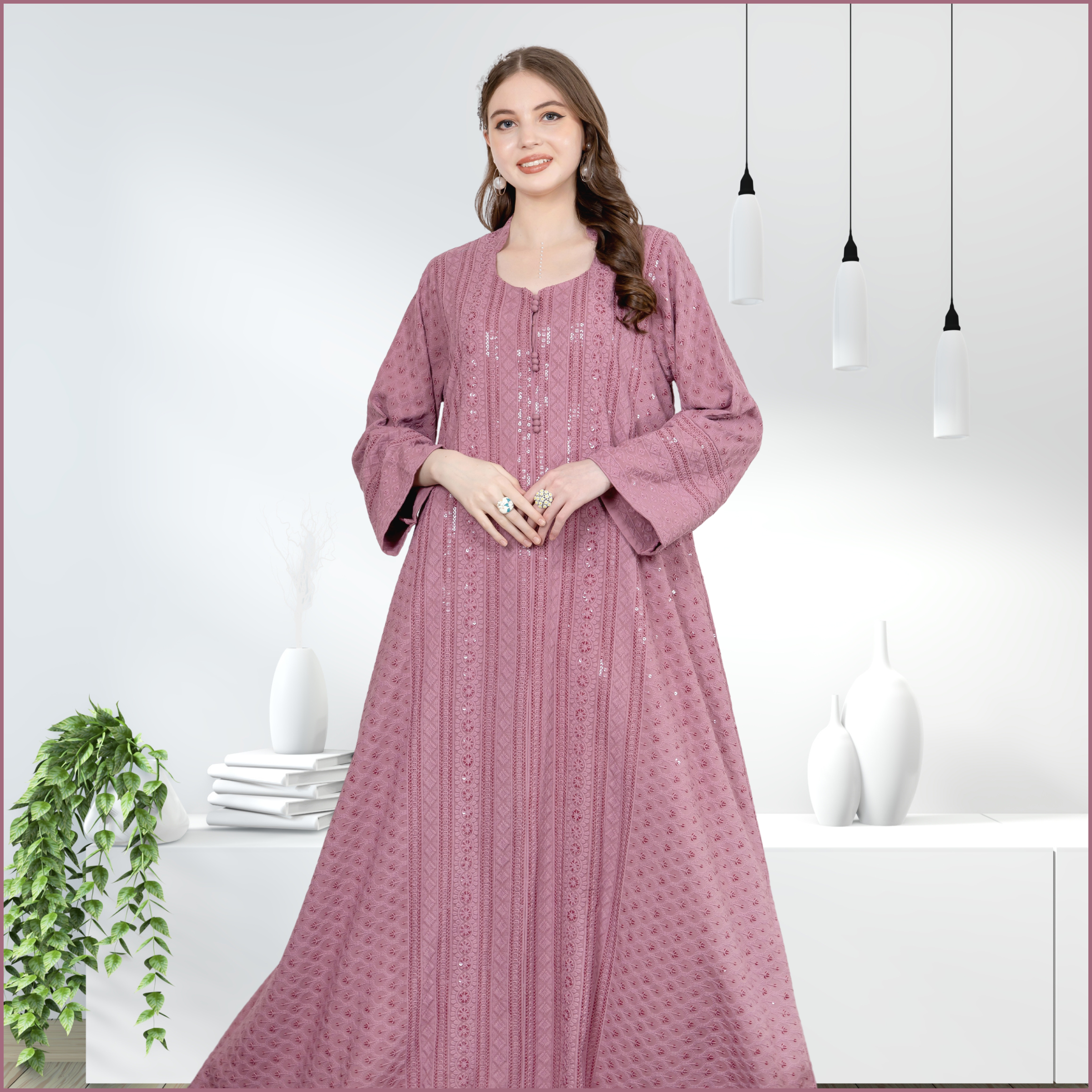
There is a particular frustration that comes with ordering a jalabiya UAE online, a garment that looks breathtaking in the product photo, only to receive something that drapes wrong, feels synthetic against the skin, or falls apart after two washes. It happens more than it should. The UAE's online market for Arabic dresses for women has expanded rapidly, and with that growth has come an enormous range of quality - from hand-stitched pieces crafted in small Emirati ateliers to mass-produced garments that arrive looking nothing like the listing. Knowing what to look for before you commit to a purchase changes everything.
Why the jalabiya UAE market has grown so crowded online
A decade ago, buying a jalabiya meant visiting a specific boutique or a trusted family tailor. The selection was curated by proximity and reputation. Today, the picture looks entirely different. Online abaya shops, multi-brand platforms, and designer-direct stores have proliferated across the UAE, each claiming authenticity, luxury, or heritage credentials. For the buyer, this is both a gift and a problem.
The expansion of e-commerce in Gulf fashion has made it possible to find an Emirati jalabiya in every price bracket, from under AED 200 to well beyond AED 2,000. But the visual language of product photography has become so polished that price is no longer a reliable quality signal on its own. A fast fashion jalabiya shot on a professional model in soft light can look indistinguishable from a hand-embroidered piece at four times the price. The difference lives in the details, and those details require a more deliberate way of reading a product page. Understanding how to parse what you see is the first skill worth developing before your next purchase.
Fabric first: What quality jalabiya feels like before it arrives
When you cannot touch a garment, the product description becomes your best guide - if you know how to read it properly.
Chiffon is lightweight and floats well in the UAE heat, but quality chiffon has a consistent weave and a gentle sheen; cheap versions feel stiff or almost papery.
Crepe offers a matte drape with a natural body, making it ideal for a jalabiya that holds its silhouette through an evening gathering.
Silk and satin blends used in formal pieces should be described by their composition: 100% silk reads differently against the skin than a polyester satin finish, however lustrous it may appear in photos.
Cotton is the ultimate breathable classic for daytime wear, absorbing moisture effectively to keep you cool in intense humidity. High-quality cotton features long-staple fibers that feel incredibly soft and resist pilling; lower-grade versions tend to feel rough, stiff, or can wash out to look dull and worn after just a few cycles.
Rayon (including variations like viscose and modal) offers a beautiful, fluid drape that mimics the luxury of silk at a more accessible point, cooling the skin the moment you put it on. Premium rayon is tightly woven and maintains its structure, whereas lower-quality variants are prone to excessive shrinking, warping out of shape, or developing a fuzzy texture after a single wash.
For everyday Arabic dresses for women living in the Gulf, cotton and linen blends remain the most practical choice. They breathe, they wash well, and they soften over time rather than degrading. At Sara, fabric specifications are listed with enough detail that you can make an informed comparison before clicking purchase.
Reading embellishment details the way a designer would
Embellishment is where a jalabiya earns its price - or fails to justify it. The three most common types are threadwork embroidery, beadwork, and applique, and each has its own quality markers. Hand-stitched embroidery, the kind that characterizes an authentic Emirati jalabiya, shows slight variation in pattern density and stitch tension. That irregularity is not a flaw; it is the signature of human craft. Machine embroidery is perfectly uniform, which can look striking in photography but tends to feel flat in person.
Beadwork quality shows in how beads are attached. Well-sewn beads sit flush against the fabric and resist light tugging. In lower-quality pieces, beading is often glued or attached at single points, making it vulnerable to friction and washing. When reviewing product photos, zoom in on neckline and cuff detailing - these are the areas where craftsmanship is most concentrated and most revealing. If close-up images are absent from the listing, that absence itself is worth noting.
Sizing and fit for Arabic dresses for women
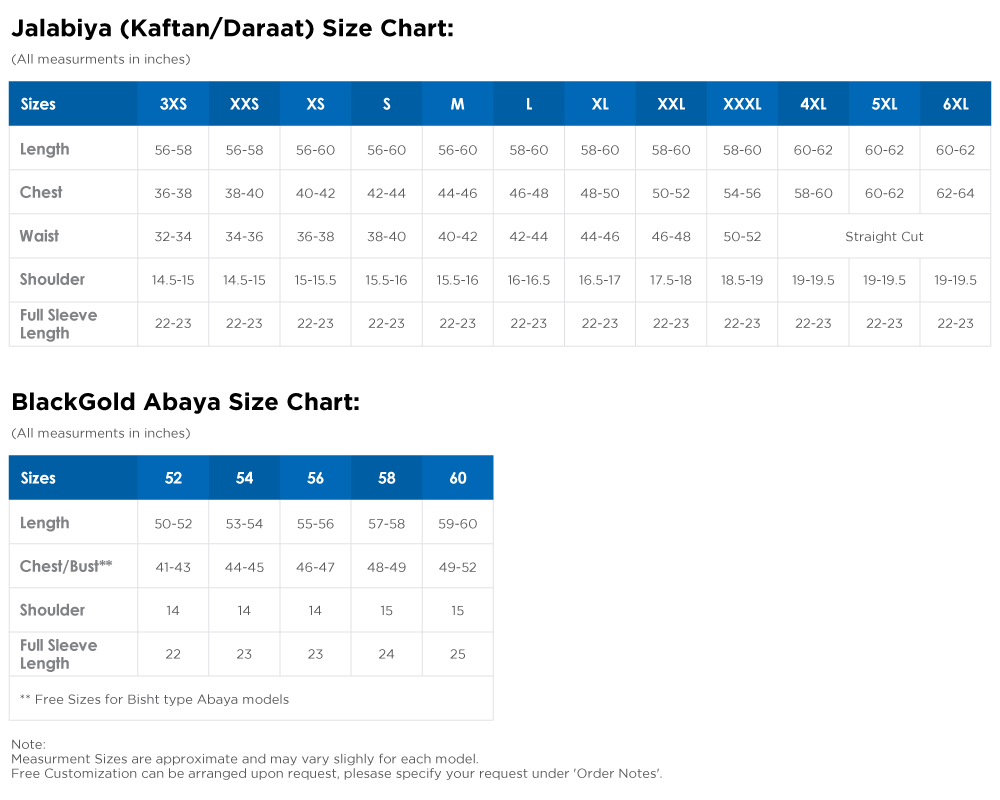
The flowing silhouette of a jalabiya is forgiving in many ways, but that does not mean sizing can be ignored. A garment that is too narrow across the shoulders will pull regardless of how loose the body falls; one cut too wide in the bodice loses the graceful drape that makes this style of Arabic dress so elegant. Most quality online abaya shops and jalabiya platforms now offer detailed size charts with both garment measurements and suggested body measurements. Use the garment measurements, not the size label.
At Sara, sizing guidance is built into each product description, which reduces the guesswork on a first purchase.
Jalabiya versus abaya: Choosing the right garment for your occasion
The distinction between a jalabiya and an abaya is a question that comes up often, and it matters more than it might first appear. The abaya is traditionally worn as an outer garment, a cover that goes over clothing for public or formal settings. It is typically modest in embellishment and designed to complement what lies beneath. The jalabiya UAE traditional dress, by contrast, is a standalone garment, fully dressed in its own right, often richly decorated and worn for occasions that call for personal expression - Eid gatherings, engagement parties, family celebrations, and home hospitality.
Some modern designers are blurring this line intentionally, producing open-front jalabiyas that can be layered over trousers or worn as an abaya with a belt. This crossover works well for women who want one piece to serve multiple contexts. If you are shopping for a specific event, being clear about which garment type you need before browsing will save time and prevent the disappointment of a beautiful piece that does not suit the setting you had in mind.
What sets a luxury jalabiya online apart from fast fashion alternatives
The word "luxury" appears on so many product pages that it has lost much of its meaning. A more useful frame is investment quality - does this piece hold up, improve with care, and remain relevant beyond a single season? Investment-quality jalabiyas share a handful of consistent characteristics. Hems are finished cleanly, not raw or loosely overlocked. Zips, if present, are concealed and smooth. And prints, whether digital or hand-blocked, are set deep into the fabric rather than sitting on the surface where they will crack or fade.
Provenance also matters. A jalabiya designed and produced in the UAE, or sourced from Gulf artisans with named embroidery techniques, tells a different story from one that is imported and relabeled. This is not snobbery - it is about understanding where the craft knowledge lives and ensuring that the price reflects genuine skill. Sara's edit of luxury jalabiya online draws from this standard, with collections that are designed in-house and produced with traceable quality control rather than resold generic inventory.
FAQs
Q: What is the difference between a jalabiya and an abaya?
A jalabiya is a fully dressed standalone garment worn for occasions like Eid, weddings, or family gatherings. An abaya is traditionally worn as an outer cover over clothing for public settings. While modern designs blend the two, the functional purpose and level of embellishment differ significantly.
Q: How do I choose the right size when buying a jalabiya UAE online?
Use the garment's actual measurements rather than the size label alone. Check shoulder width, length from shoulder to hem, and sleeve length against your own measurements.
Q: Which fabric is best for jalabiya in the UAE's hot climate?
For everyday wear, cotton and linen blends offer the most breathability. Crepe works well for evening occasions where you want structure without weight. For formal events, silk or silk-blend chiffon drapes beautifully while remaining light enough for the Gulf climate. Avoid heavy polyester in summer months.
Q: Can I wear a jalabiya for formal occasions like weddings in the UAE?
Absolutely. Formal jalabiyas in silk, satin, or heavy chiffon with hand embroidery or beadwork are among the most appropriate choices for Emirati weddings and celebration gatherings. The key is matching the level of embellishment to the occasion, understated for daytime events, richly decorated for evening celebrations.
Q: How do I spot a quality jalabiya from product photos online?
Request or seek out close-up images of the neckline, cuffs, and embellishment panels. Consistent thread tension, clean seam finishing visible at the edges, and beads that sit flush against the fabric are all signs of quality craft. Absent close-up images are a flag worth heeding before purchase.
Final thoughts: Buying with intention in a crowded market
Online shopping for a jalabiya UAE has never offered more choice, which is precisely why developing a clear eye for quality has become a necessary skill. The women who shop well are not necessarily the ones who spend most - they are the ones who read product pages carefully, understand fabric and construction, and buy from retailers who can demonstrate rather than merely claim their quality standards. When a garment is chosen with that kind of attention, it earns its place in a wardrobe rather than sitting unworn after one occasion. Sara's collection is built with that buyer in mind.
 MD NIROB
This is a very helpful guide for anyone shopping for a jalabiya online. I especially liked the focus on fabric quality, fit, and craftsmanship, which are often overlooked when buying online. These practical tips can help shoppers make more confident decisions and find pieces they'll enjoy for years. Thanks for sharing such useful advice. If you're looking for quality products and excellent service, feel free to visit our vape shop as well. Site Link : https://vapecollection.shop/
 Free Shipping
 Delivery on time
 100% Secure Payment
Copyright © All right reserved Sara Arabia (SARA PLAZA GEN. TRAD. & CONT. CO. WLL.).


Leave a Comment
Please note, comments must be approved before they are published